Stinging insect populations across Hampden County expand rapidly between June and September, converting minor soffit gaps into dense colonies numbering between 1,000 and 5,000 workers. In historic neighborhoods like…
Stinging insect populations across Hampden County expand rapidly between June and September, converting minor soffit gaps into dense colonies numbering between 1,000 and 5,000 workers. In historic neighborhoods like McKnight and Forest Park, multi-story Victorian architecture features complex fascia boards, wrap-around porch overhangs, and unsealed soffit vents that offer ideal shelter for aerial bald-faced hornets and Polistes paper wasps. Modern subdivisions in East Forest Park and Pine Point encounter distinct pressures, where subterranean yellowjackets colonize perimeter landscaping, rodent burrows, and foundation edges. Unchecked colonies compromise personal safety around doorways and pose significant health hazards to allergic occupants, while wood-boring species or moisture-retaining interior nests can compromise drywall integrity over a single summer.
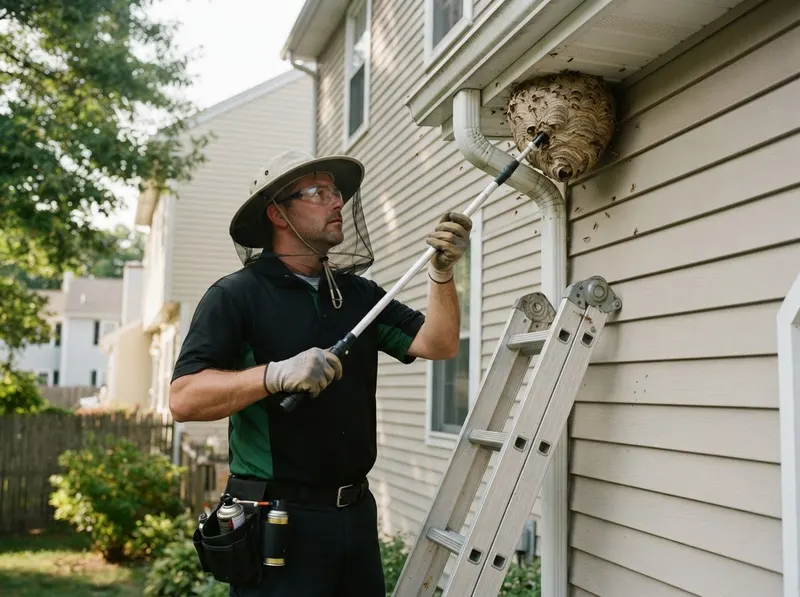
Decision guidance depends strictly on the nest architecture and physical access. Exposed umbrella nests beneath porch eaves permit immediate direct treatment and manual scraping without structural opening. Conversely, void-nesting yellowjackets that penetrate exterior brick ties or vinyl siding seams in Six Corners or Boston Road require precision micro-injection dusting using specialized bulb or aerosol applicators. Surface sprays fail against void-nesting colonies because consumer aerosols agitate workers and drive them inward through electrical outlets, interior baseboards, and ceiling fixtures rather than eradicating the queen. A single targeted application delivers active insecticidal dust directly into the flight path, allowing returning foragers to track the compound deep into the brood combs.
Treatment execution follows a clinical three-step sequence to ensure zero re-colonization. First, technicians map the active flight corridor and verify structural entry points along the siding or chimney flashing. Second, targeted knockdown agents and desiccant dusts neutralize active adults and prevent defensive swarming. Third, accessible exterior comb structures are mechanically detached, bagged, and removed, followed by a localized perimeter barrier treatment. The operational trade-off centers on physical removal: exposed nests come down immediately, but deep wall-cavity nests must remain sealed behind intact drywall until all latent pupae emerge and contact the residual agent over a 72-hour period, avoiding unnecessary structural cuts.
Every job gets a firm, written price after a free on-site visit.
Tell us about your stinging insect and wasp nest removal job in Springfield and we'll send a clear, written quote, usually the same day.
 Orevian Pest Solutions