Rodent exclusion replaces temporary poison baits with permanent architectural barriers. Norway rats burrow into stone foundations and chew through plastic drain pipes, requiring an opening of only 0.5 inches to enter a…
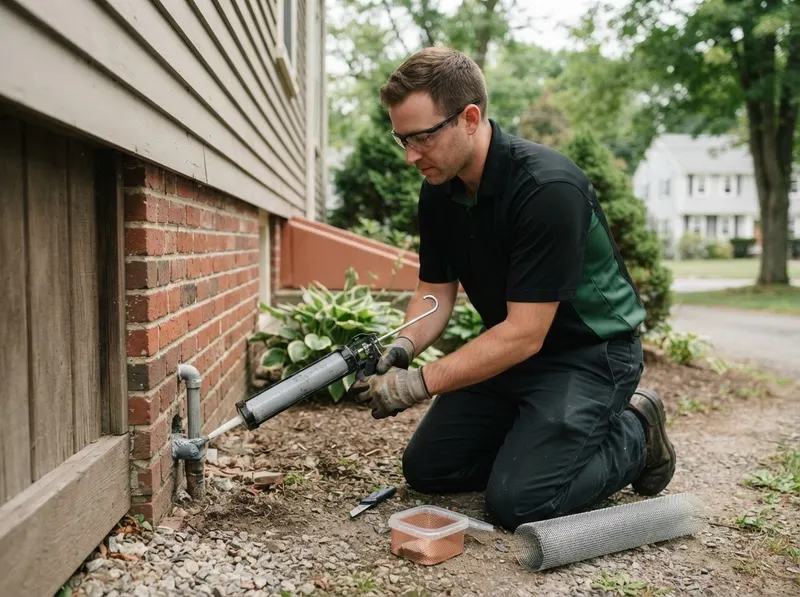
Rodent exclusion replaces temporary poison baits with permanent architectural barriers. Norway rats burrow into stone foundations and chew through plastic drain pipes, requiring an opening of only 0.5 inches to enter a basement. Field mice flatten their ribs to slide through openings of 0.25 inches, commonly slipping beneath worn door sweeps or around gas utility penetrations. Trapping alone leaves the underlying entry pathway intact, ensuring new colonies enter as autumn temperatures drop across Hampden County. A true structural exclusion seals every threshold using materials rodents cannot gnaw through, including copper mesh, silicone sealants, and 19-gauge galvanized steel mesh.
The structural architecture across Springfield directly shapes how infestations establish. Historic Queen Anne properties in McKnight and multi-family wood-frame dwellings in Six Corners, Upper Hill, and Forest Park frequently feature porous fieldstone foundations, settling mortar, and low ground-level air vents. Concrete-slab ranches near East Forest Park, Boston Road, and Pine Point more commonly leak mice through vinyl corner posts and garage door perimeter seals. Proximity to wetlands, Blunt Park, and the Connecticut River corridor through Metro Center accelerates outdoor pressure from Norway rats nesting along riverbanks and commercial corridors, driving them into warm subfloors when winter frost hardens topsoil.
Selecting structural exclusion over recurring chemical bait stations represents a permanent defense strategy. Monthly rodenticide contracts create secondary poisoning hazards for household pets, allow rodents to die inside inaccessible drywall voids, and require perpetual spending without solving physical vulnerability. Full mechanical exclusion carries a higher upfront cost but produces definitive population termination. The operational steps follow a clear sequence: first, a technician performs a ground-to-roof perimeter inspection to map gnaw marks, rub marks, and droppings; second, technicians install heavy-gauge metal caps, escutcheon plates, and concrete patch repairs over all identified entries; third, interior traps clear the remaining target population without requiring residents to vacate the property.
Every job gets a firm, written price after a free on-site visit.
Tell us about your norway rat and field mouse rodent exclusion job in Springfield and we'll send a clear, written quote, usually the same day.
 Orevian Pest Solutions